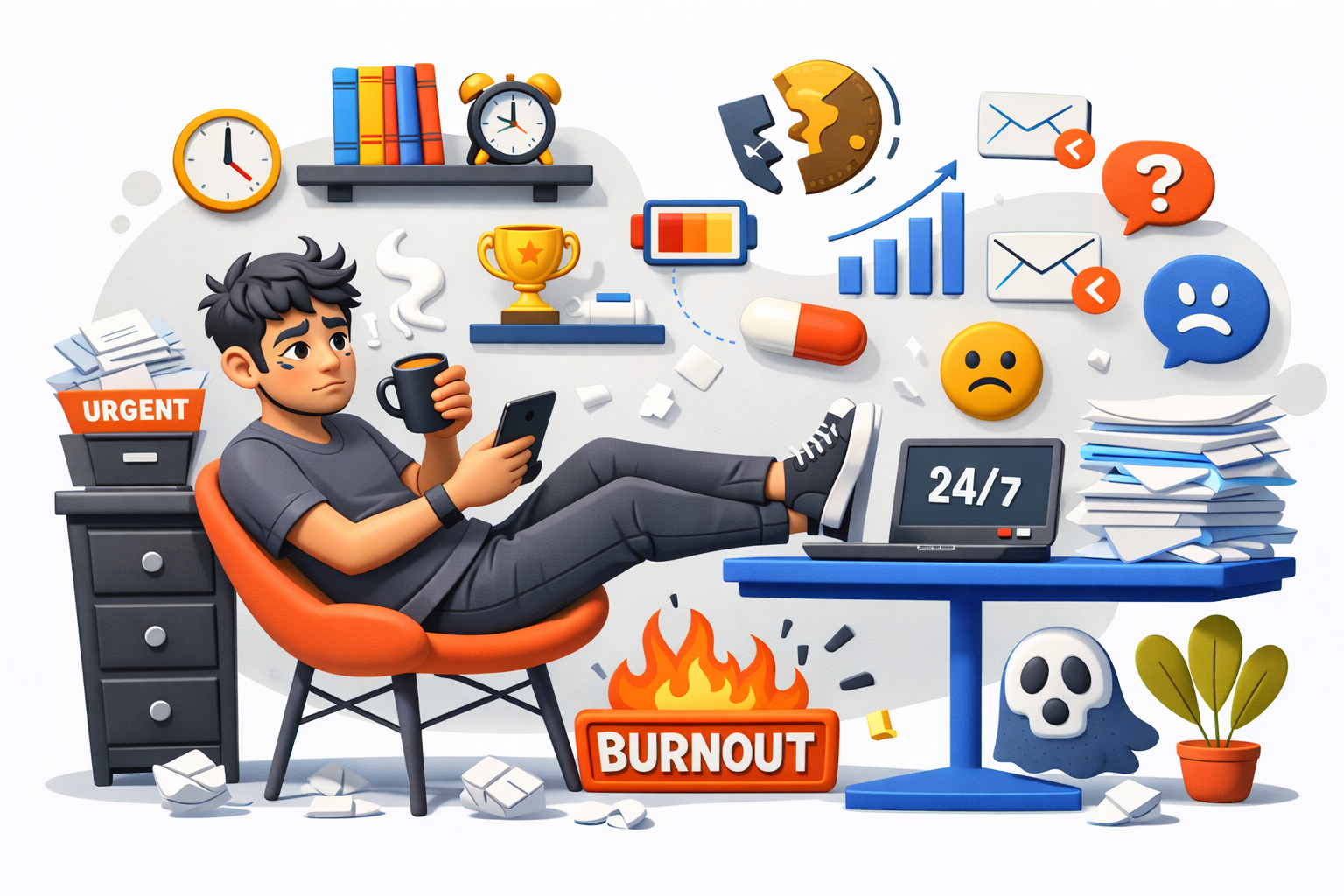
Why Hustle Culture Is Failing Young Indians (And What to Do Instead)
For years, young Indians have been told one thing repeatedly:
“Grind harder.”
Sleep less. Work more. Sacrifice everything now so life will be better later.
Social media glorified 16-hour workdays, side hustles after office hours, and burnout disguised as ambition. Hustle culture promised success, money, and freedom.
But in 2026, the reality is clear:
👉 Hustle culture is failing young Indians — mentally, physically, and financially.
This blog breaks down why hustle culture doesn’t work in India, how it’s harming an entire generation, and what a healthier, smarter alternative looks like.
What Is Hustle Culture?
Hustle culture is the belief that:
-
Working constantly equals success
-
Rest is laziness
-
Saying “no” to work means falling behind
-
Your worth is tied to productivity
In India, hustle culture became popular due to:
-
Startup boom
-
Social media influencers
-
Rising competition & job insecurity
-
Middle-class pressure to “make it big”
On the surface, it looks motivational.
Underneath, it’s unsustainable.
Why Hustle Culture Became So Popular in India
1. Massive Competition
With millions of students and limited opportunities, young Indians were taught:
“If you don’t work harder than others, you’ll be left behind.”
2. Social Media Illusion
Instagram and LinkedIn are full of:
-
“24-year-old founder”
-
“Crorepati before 30”
-
“I work 7 days a week”
What’s missing?
❌ Privilege
❌ Family support
❌ Burnout stories
❌ Mental health struggles
3. Economic Pressure
Rising:
-
Cost of living
-
Education loans
-
Family responsibilities
Young Indians hustle not by choice — but by fear.
How Hustle Culture Is Failing Young Indians
1. Burnout Has Become Normal
In India, burnout is no longer an exception — it’s expected.
Symptoms many young professionals face:
-
Chronic fatigue
-
Anxiety & panic attacks
-
Lack of focus
-
Sleep disorders
-
Constant guilt for resting
Yet burnout is often dismissed as:
“You just need to work harder.”
2. Mental Health Is Still Stigmatized
Despite awareness, many Indians still believe:
-
Stress = strength
-
Therapy = weakness
-
Rest = laziness
As a result:
-
People suffer silently
-
Emotional exhaustion builds
-
Productivity actually drops
Hustle culture ignores mental health realities.
3. Hustling ≠ Financial Stability
Contrary to popular belief:
-
Working more hours doesn’t guarantee higher income
-
Multiple side hustles often lead to scattered focus
-
Long hours reduce creativity & decision-making
Many young Indians are:
-
Busy but broke
-
Overworked but underpaid
-
Productive but directionless
4. Creativity and Innovation Are Dying
True innovation needs:
-
Rest
-
Reflection
-
Mental clarity
Hustle culture leaves no space to think.
It turns humans into machines — and machines don’t innovate.
5. Identity Is Tied Only to Work
One of the biggest dangers:
“If I stop working, who am I?”
Young Indians are losing:
-
Hobbies
-
Relationships
-
Self-worth beyond careers
A job should be part of life — not the whole identity.
Hustle Culture vs Sustainable Growth
| Hustle Culture | Sustainable Growth |
|---|---|
| Long hours | Smart systems |
| Constant pressure | Intentional work |
| Burnout | Balance |
| Short-term wins | Long-term success |
| Quantity | Quality |
What Actually Works Better in 2026
1. Smart Work Over Hard Work
Focus on:
-
High-impact tasks
-
Skill-building
-
Automation & tools
-
Clear goals
Not everything needs hustle — some things need clarity.
2. Building Skills, Not Just Hours
Skills that matter in 2026:
-
Digital marketing
-
AI tools
-
Communication
-
Problem-solving
-
Personal branding
Skills compound. Hustle burns out.
3. Work-Life Integration (Not Balance Myth)
Instead of strict balance:
-
Design work around life
-
Take intentional breaks
-
Protect mental energy
Rest is not a reward — it’s a requirement.
4. Redefining Success for Indian Youth
Success doesn’t always mean:
-
Crores
-
Fancy titles
-
Constant grind
It can also mean:
-
Peace of mind
-
Stable income
-
Health
-
Time with family
Why Indian Youth Are Questioning Hustle Culture Now
In 2026, young Indians are:
-
Choosing remote work
-
Prioritizing mental health
-
Leaving toxic workplaces
-
Starting value-driven businesses
-
Saying “no” to burnout glorification
This isn’t laziness.
It’s awareness.
A Better Mindset for Young Indians
Instead of asking:
❌ “How much can I hustle?”
Ask:
✅ “What actually moves my life forward?”
Instead of glorifying exhaustion:
-
Celebrate consistency
-
Celebrate learning
-
Celebrate sustainability
Final Thoughts: Hustle Less, Think Better
Hustle culture told young Indians:
“Sacrifice today for a better tomorrow.”
But many sacrificed today — and tomorrow never arrived.
In 2026, the real flex is:
-
Working with purpose
-
Resting without guilt
-
Growing without burning out
Success should not cost your health, peace, or identity.
❓ FAQ
1. What is hustle culture in India?
Hustle culture in India promotes constant overworking, long hours, and sacrificing personal life in the name of success, often leading to burnout and stress.
2. Why is hustle culture failing young Indians?
Hustle culture fails because it causes burnout, mental health issues, reduced productivity, and financial instability without guaranteeing long-term success.
3. How does hustle culture affect mental health?
It increases anxiety, stress, sleep disorders, emotional exhaustion, and guilt around rest—especially among young professionals and students in India.
4. Is hustle culture necessary for success in India?
No. In 2026, sustainable growth, smart work, skill-building, and work-life integration are proving more effective than nonstop hustling.
5. What is a better alternative to hustle culture?
A healthier alternative includes focused work, continuous learning, mental well-being, realistic goals, and creating systems instead of relying on exhaustion.
6. Are Indian companies moving away from hustle culture?
Yes. Many startups and professionals are now prioritizing flexible work, mental health, productivity tools, and sustainable work environments.